Know the repositories behind your product.
Connect repository ownership and product relationships. Distinguish scanned code from the areas that still need assessment, with coverage visible alongside the findings.
Bring repository findings, dependency risk and exposed secrets into product context. Understand what has been checked, which products are affected, and where your team should start.
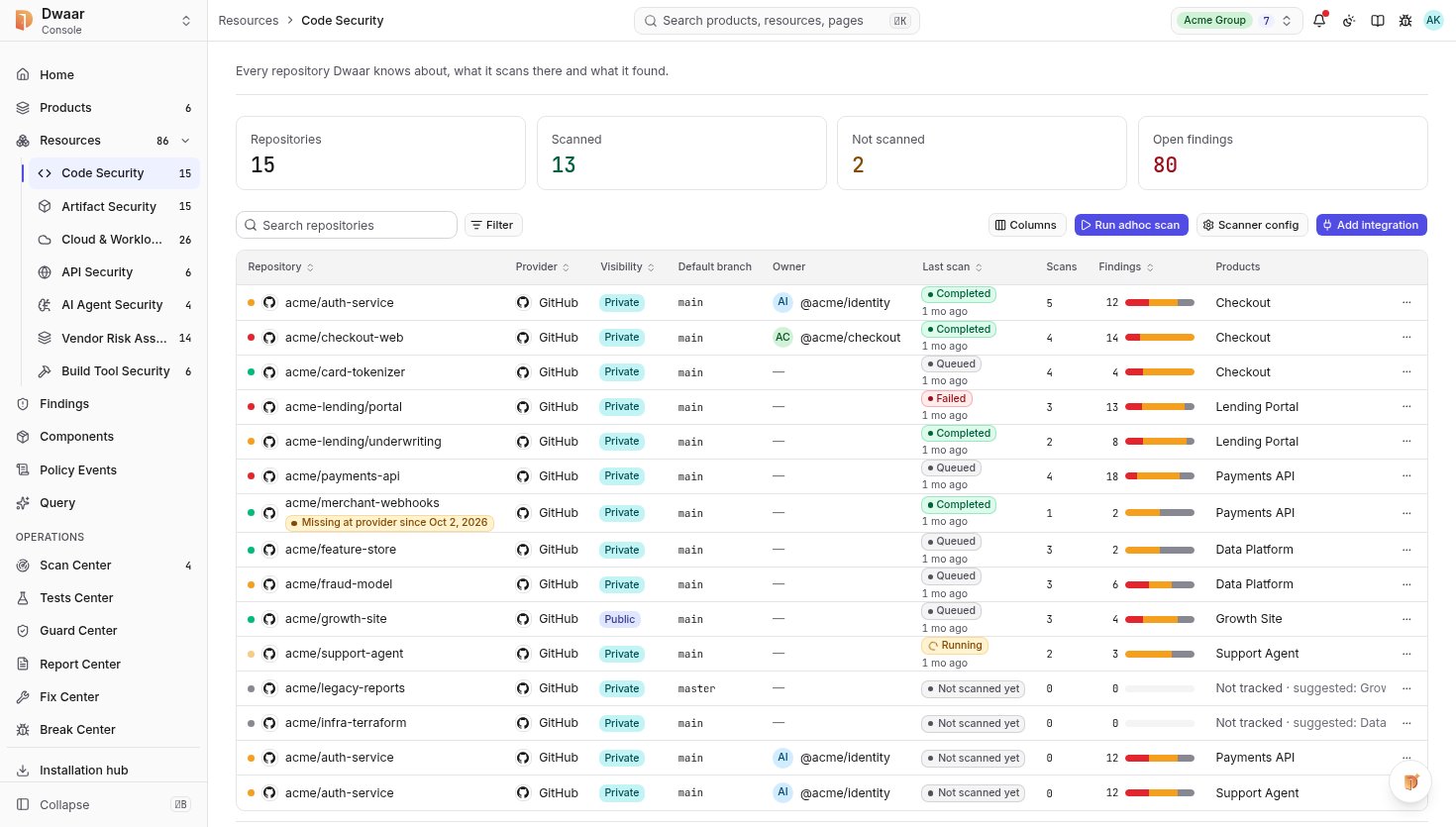
01Which repositories belong to this product?
02What has been checked?
03Which findings need attention first?
Bring the resource, finding and product relationship into one useful conversation.
Connect repository ownership and product relationships. Distinguish scanned code from the areas that still need assessment, with coverage visible alongside the findings.
Give the owner a clear account of the weakness, its source and the evidence available to investigate it. Bring secrets, dependencies and code findings into the same product conversation.
Where lineage is established, trace an affected component into an artefact and its deployment context. Give the team more context for the priority decision.
A repository is one part of the product. Connect it to the builds, workloads and interfaces that make that code available to users.
Explore the platform ↗Available checks depend on the resource, integration and agreed assessment scope.

Review the product context alongside findings and coverage. Click the capture to inspect it in full.
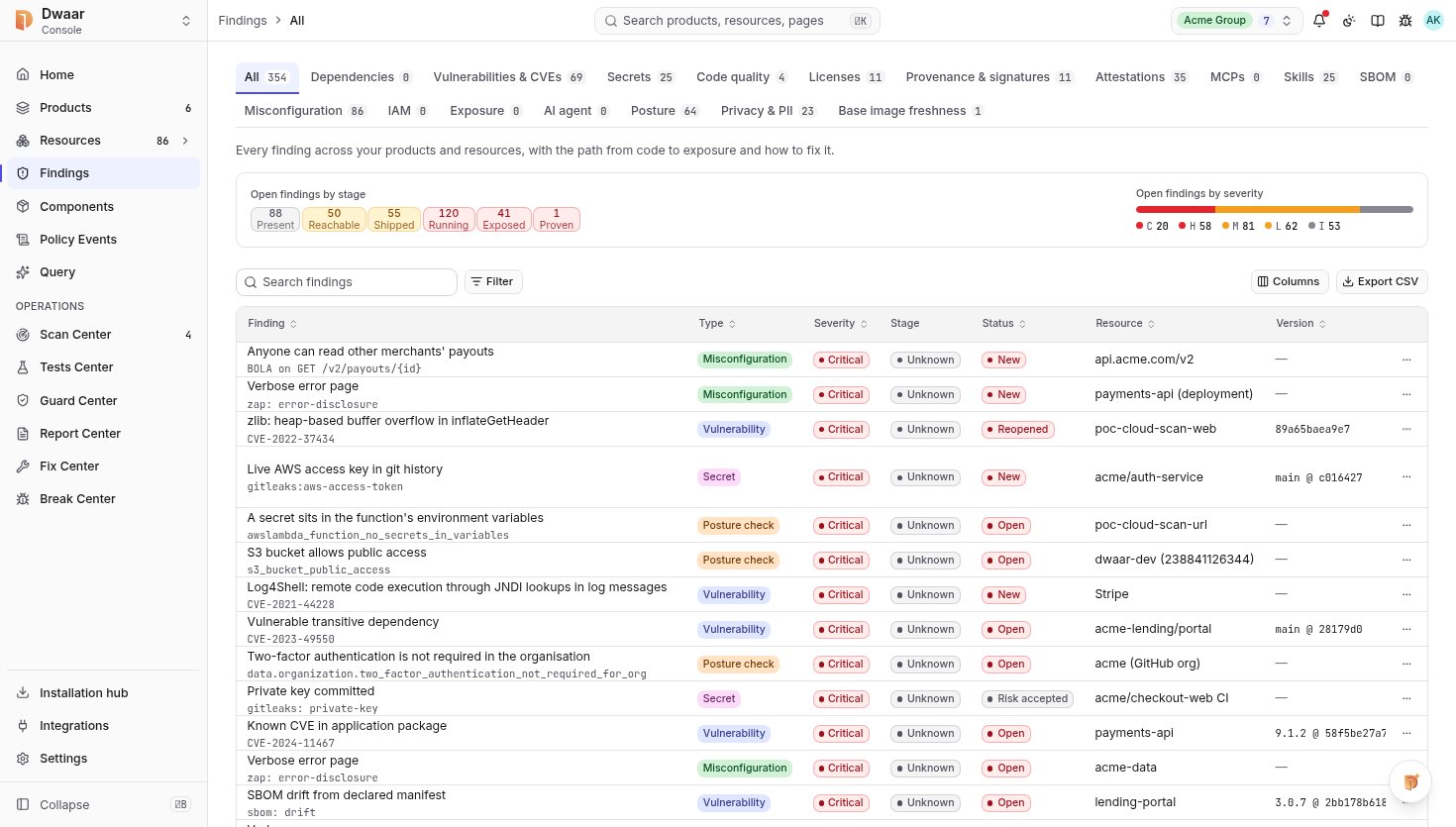
Code Security assesses the source and its configuration. Artefact Security examines the built images, packages and files you ship. Connecting them helps distinguish a source finding from a component included in a particular build.
It remains visible as a coverage gap. Missing scan evidence is kept separate from a completed assessment with no findings.
Reachability depends on the supported analysis and available context. A finding without that evidence remains unknown; severity alone does not establish a reachable path.
Start with one product. Connect the context. Give your team a clear next action.