Build the third-party picture.
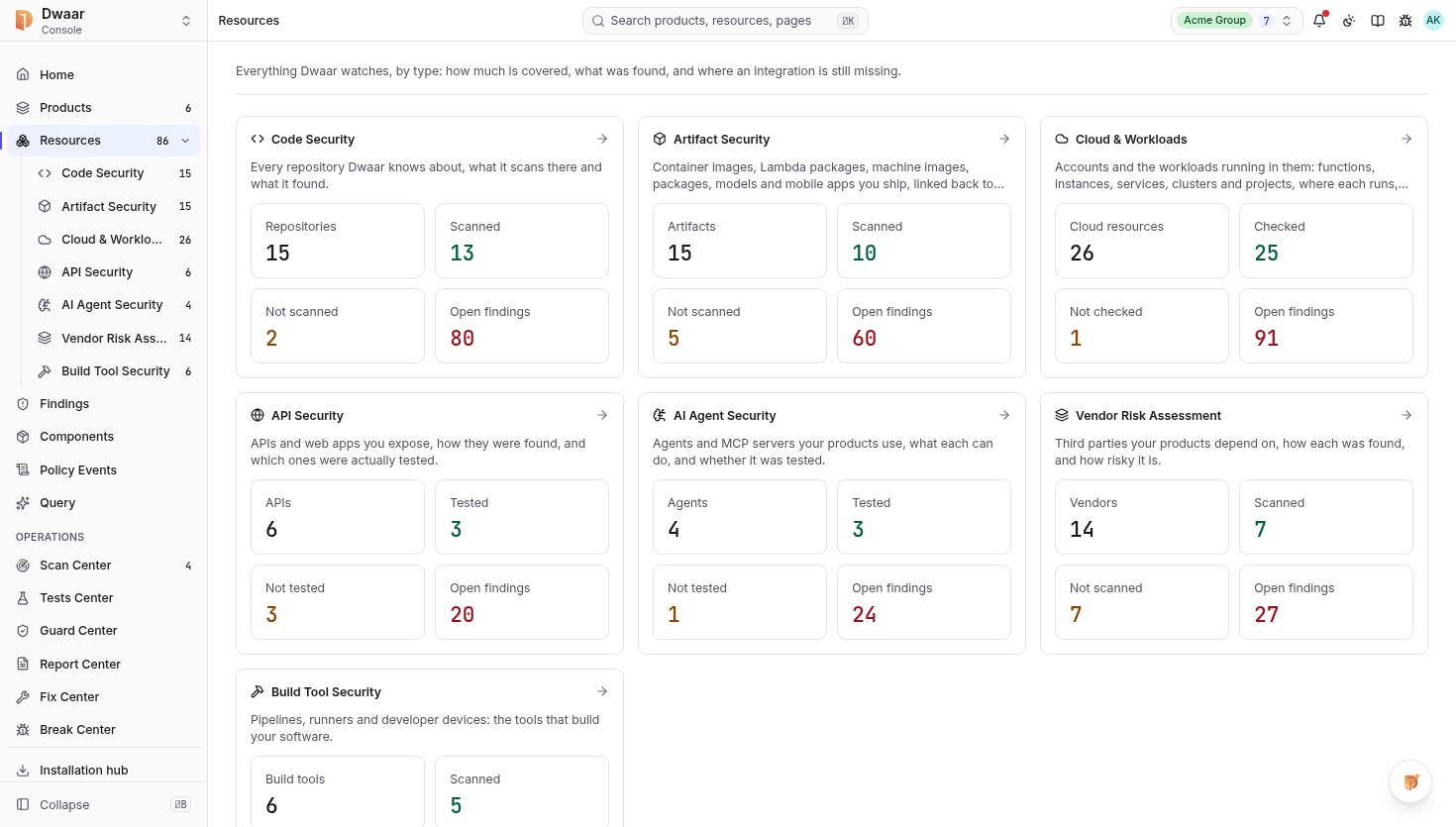
Bring supported discovery signals and imported vendor information into a product-linked inventory. Review each relationship in its actual operating context.
Connect vendors and SaaS tools to the products and data they support. Review available security evidence, ownership and assessment gaps so the right team can follow up.
01Which third parties does this product rely on?
02What data or access is involved?
03What evidence is current or missing?
Bring the resource, finding and product relationship into one useful conversation.
Bring supported discovery signals and imported vendor information into a product-linked inventory. Review each relationship in its actual operating context.
Assess supplied documents, available posture signals and their freshness alongside the vendor’s role. A missing document remains an evidence gap.
Route follow-up work to the service owner, security team or procurement contact responsible for it. Make third-party review part of the product conversation.
A third-party service can support several products. Connect the relationship and available evidence to the people who own that dependency.
Explore the platform ↗Available checks depend on the resource, integration and agreed assessment scope.

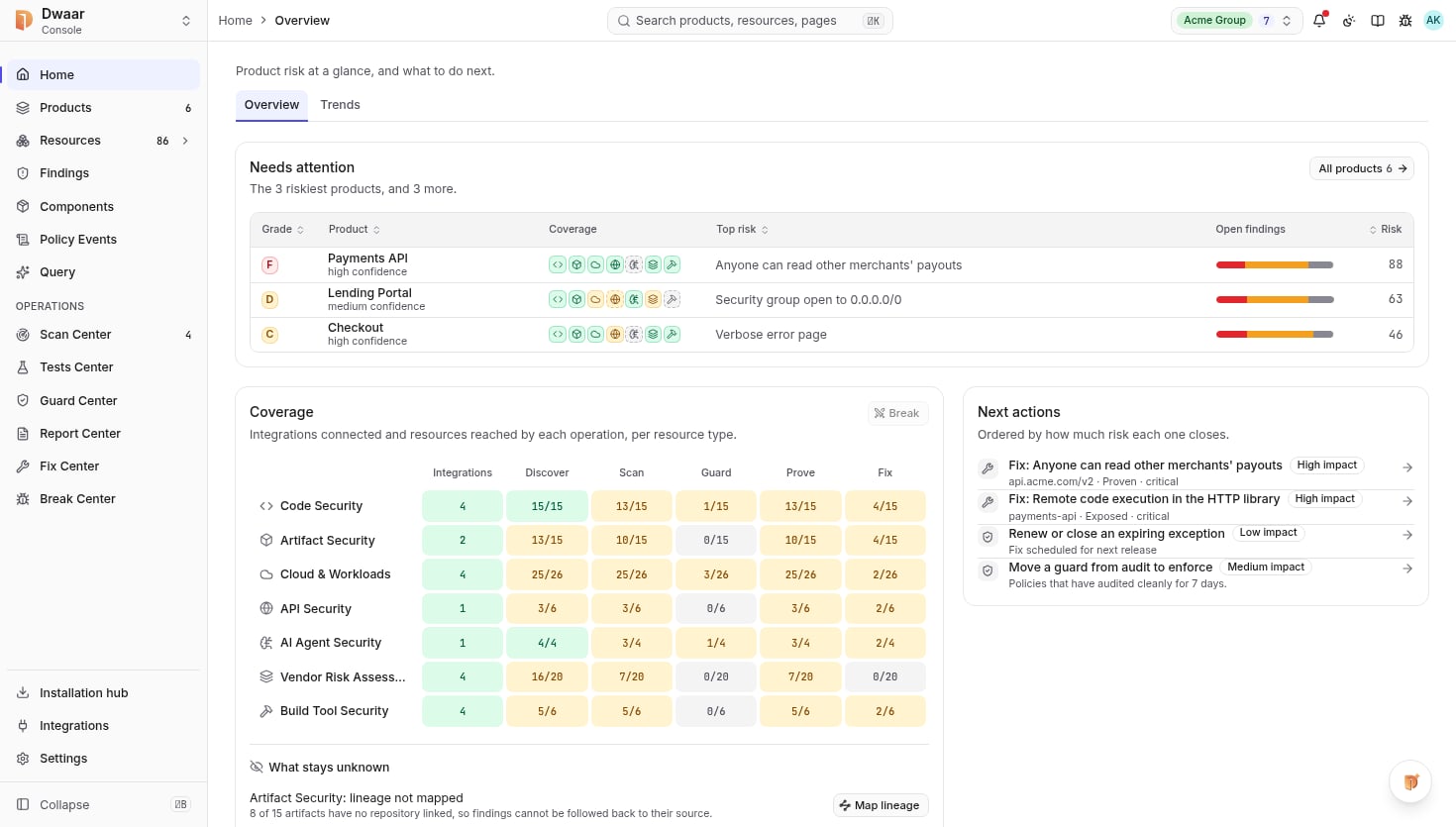
Review product relationships and coverage across your resource inventory.
A detected SDK is a discovery signal. Its presence alone does not establish the vendor’s full access, configuration or internal security posture.
Reviewing your integration and supplied vendor evidence is different from testing a third party’s systems. Active tests require a separately authorised scope.
Agent tool behaviour belongs under AI Agent Security. This area focuses on vendor and SaaS dependencies, their relationships and security evidence.
Start with one product. Connect the context. Give your team a clear next action.