Map the build path.
Connect pipelines, repositories and runners so the team can see the systems behind a release. Understand ownership where a shared build resource supports several products.
Connect CI/CD workflows, runners and supported developer environments to your product’s security picture. Investigate build-system weaknesses with the repository and release context needed to act.
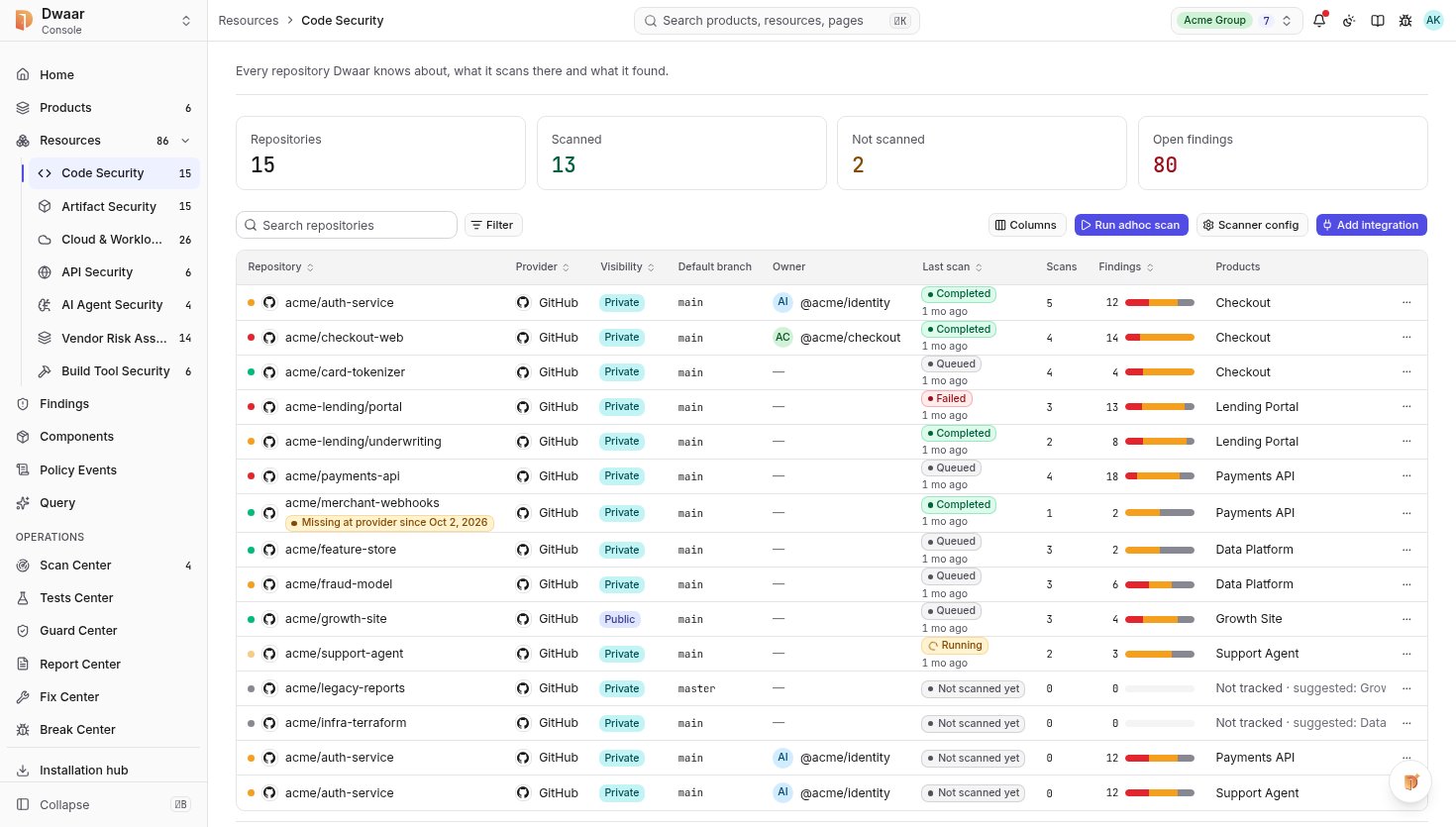
01Which build systems can change this product?
02Where are permissions or configurations risky?
03What developer environment coverage do we have?
Bring the resource, finding and product relationship into one useful conversation.
Connect pipelines, repositories and runners so the team can see the systems behind a release. Understand ownership where a shared build resource supports several products.
Bring supported workflow checks and runner posture into context. Give platform engineering a clear view of the resource, finding and next action.
Where supported connections exist, review device posture and local AI or MCP inventory separately from repository coverage. Keep the limits of each connection visible.
The path to production begins before a build exists. Connect the systems that can change your source and releases to the products they affect.
Explore the platform ↗Available checks depend on the resource, integration and agreed assessment scope.

Review the product context alongside findings and coverage. Click the capture to inspect it in full.
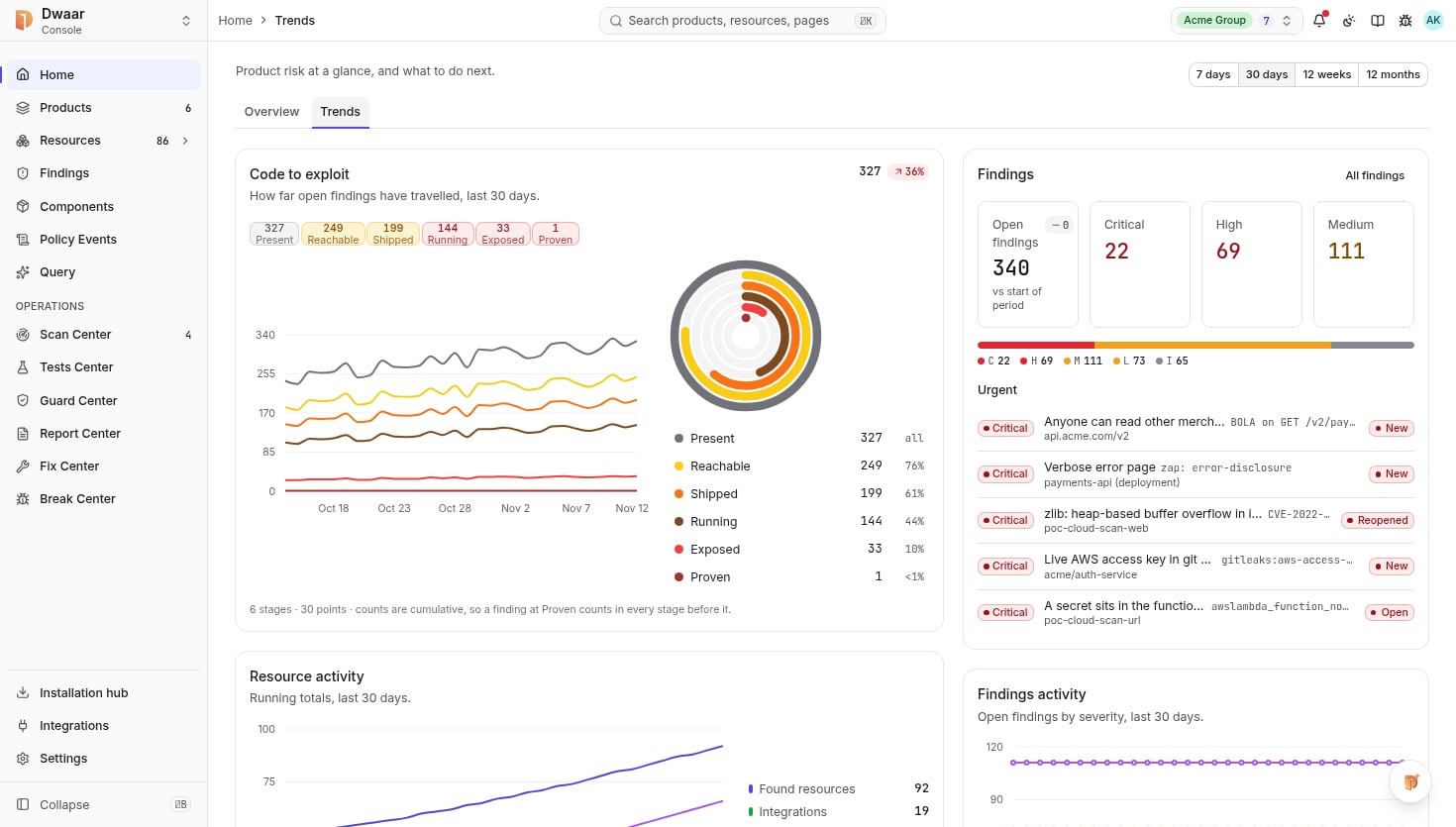
Repository, runner and device coverage are separate. Each needs its own supported connection and assessment evidence.
Inventory shows what is observed. Enforcement requires a supported policy control point and its own deployment and decision evidence.
The responsible owner may be platform engineering, a repository maintainer or the developer environment team. Product relationships help show the broader impact.
Start with one product. Connect the context. Give your team a clear next action.