
Start with the problem
in front of you.
A first baseline, a clearer fix queue, or evidence for the next review. Start with a defined scope and a useful next action.
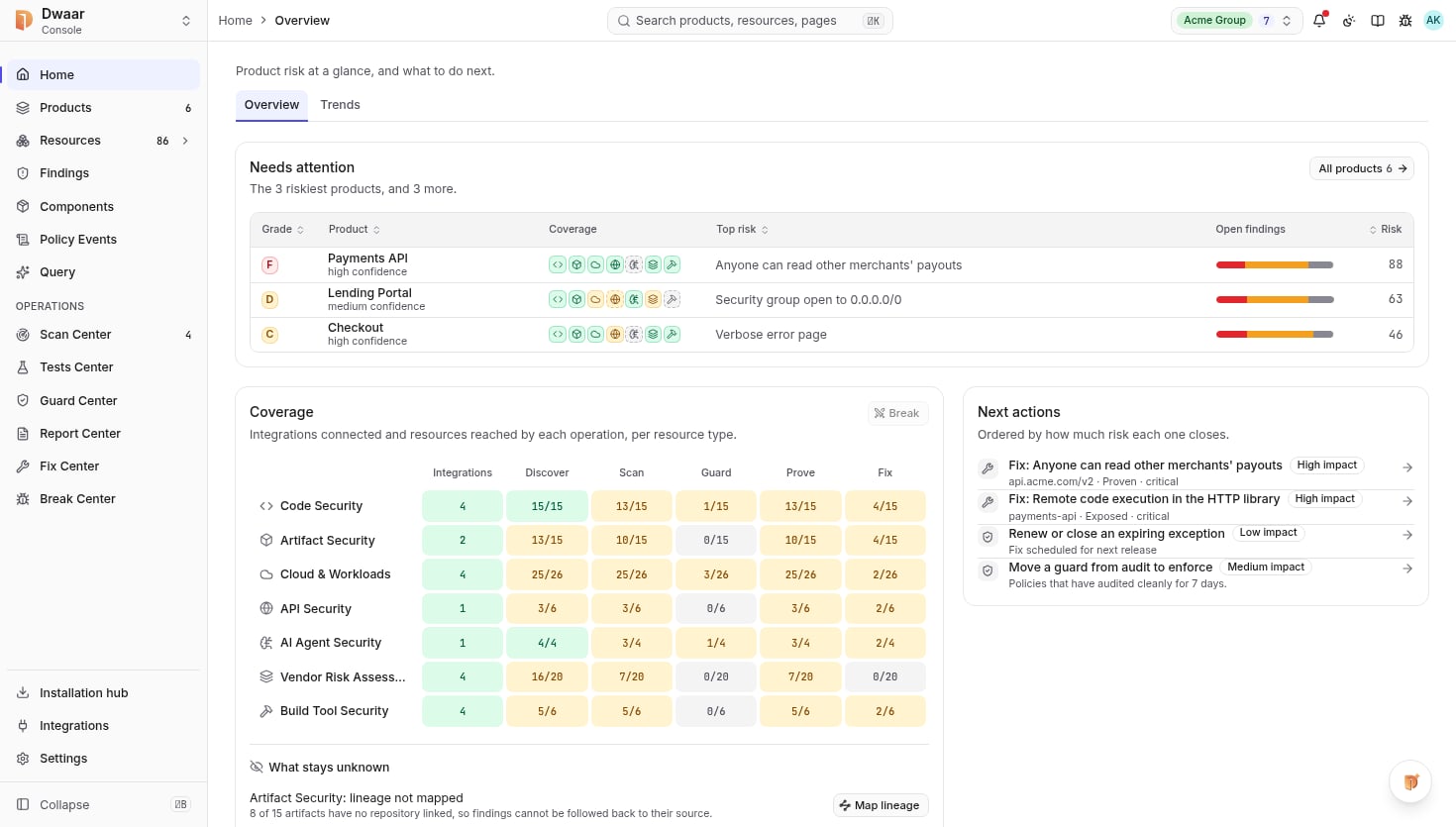
Know where your product stands.
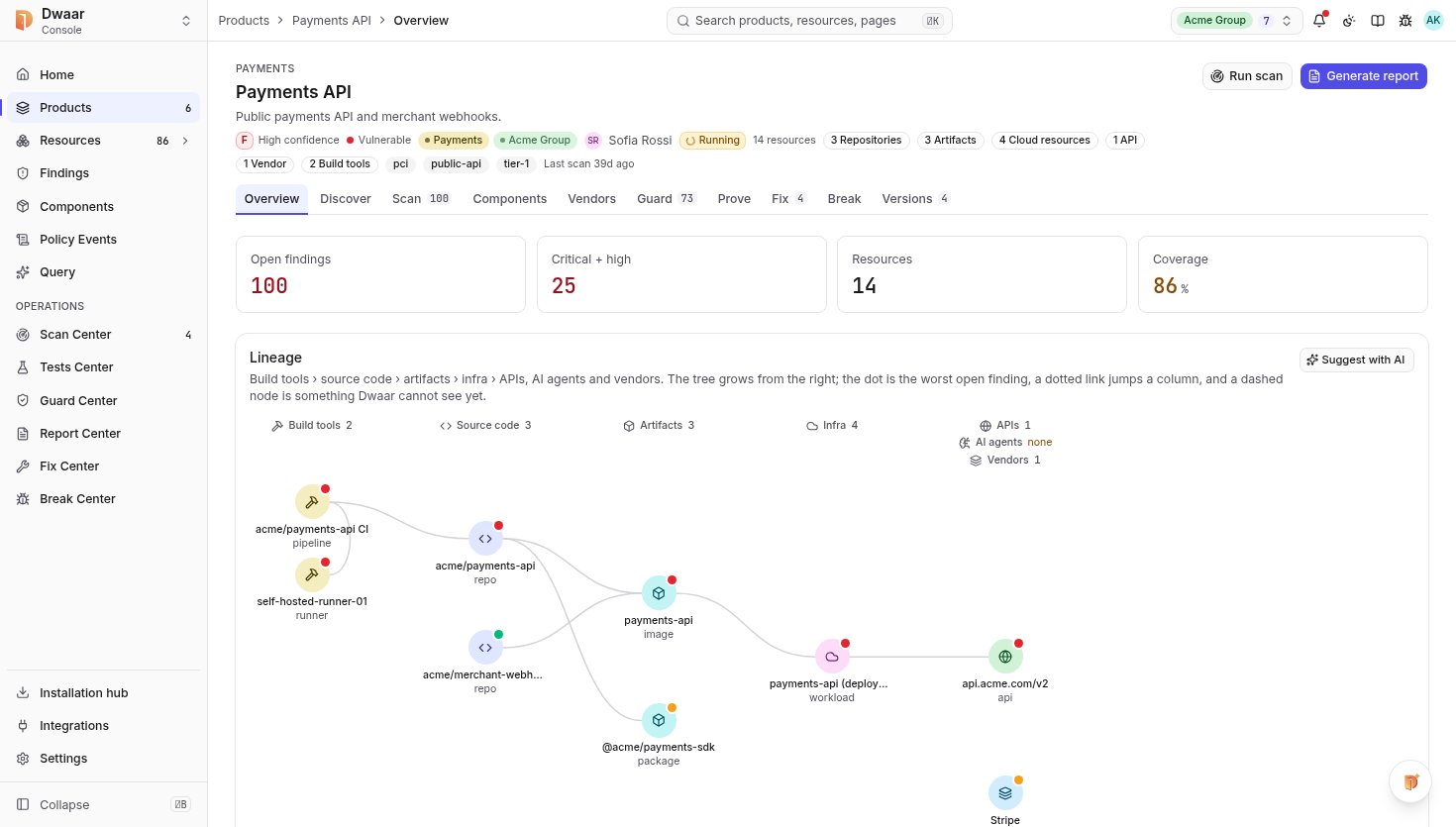
Agree the product and resources in scope, review supported assessment coverage, and establish the first priorities with the team that owns it.
- Confirmed resource map
- Covered and untested areas
- Priority findings and scoped evidence
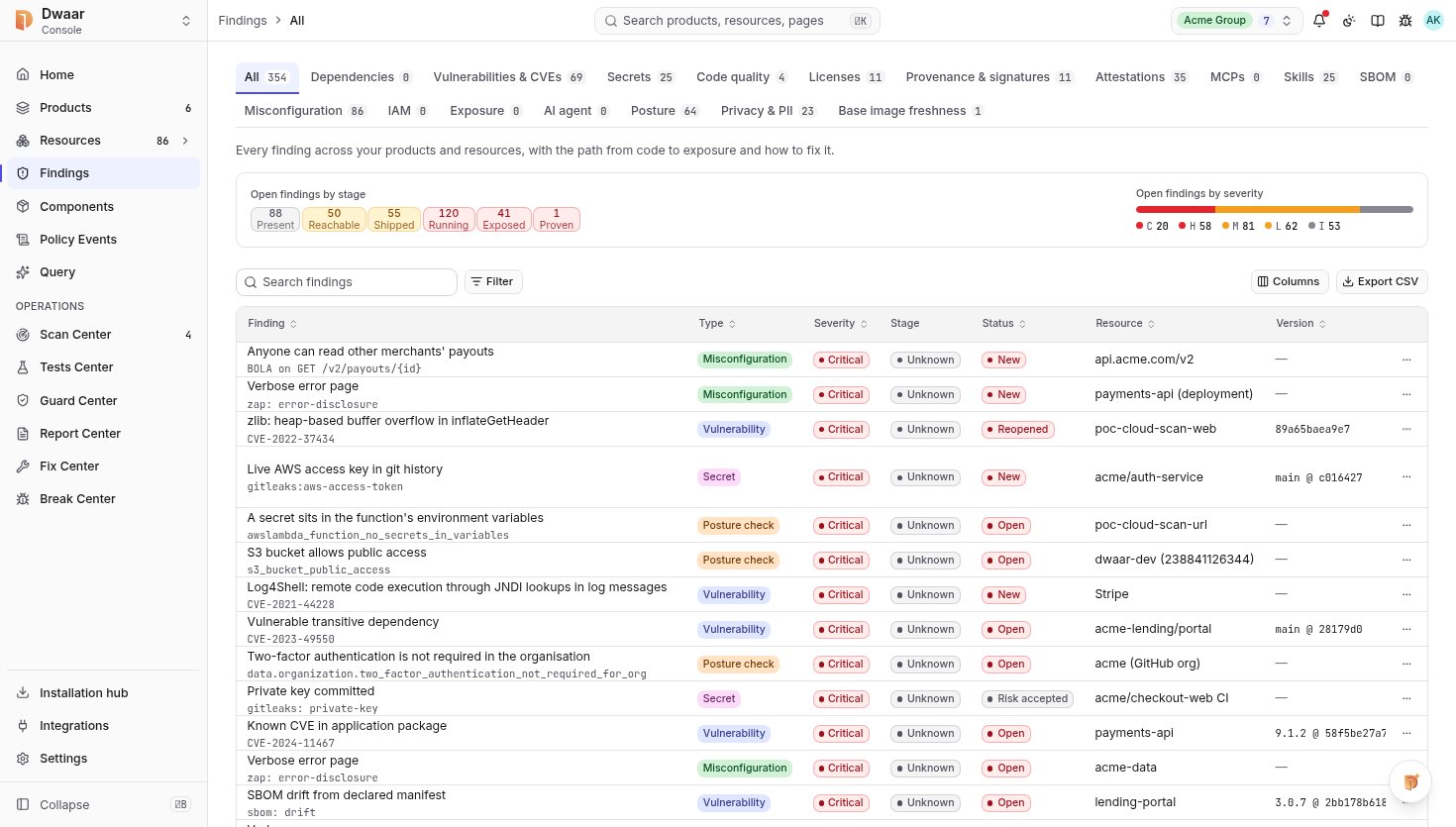
Give the team a clearer fix queue.
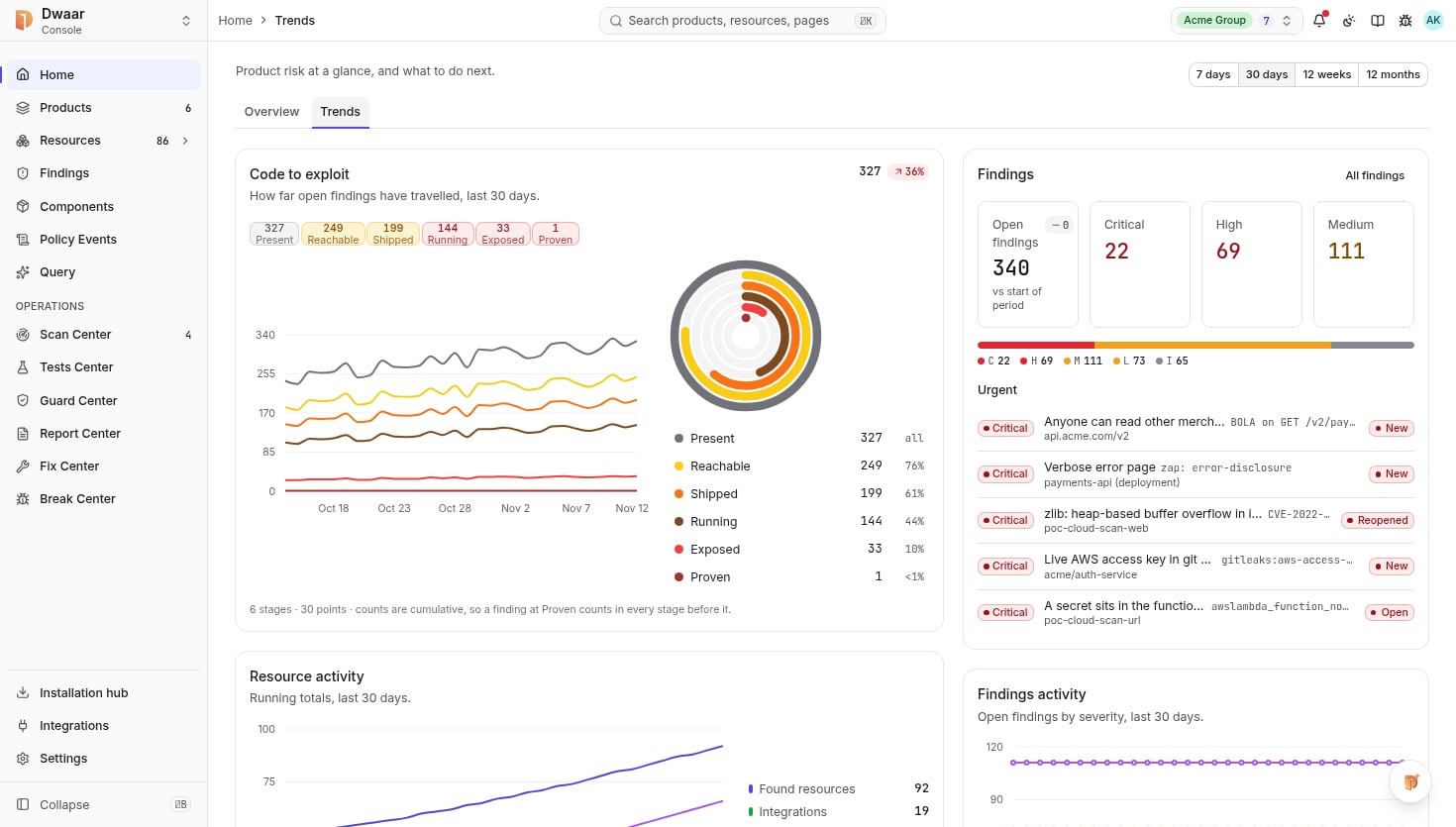
Bring reachability and exposure evidence into the priority decision. See the finding, its affected product and the context available to investigate it.
- Evidence behind the finding
- Affected product and owner
- A useful next action
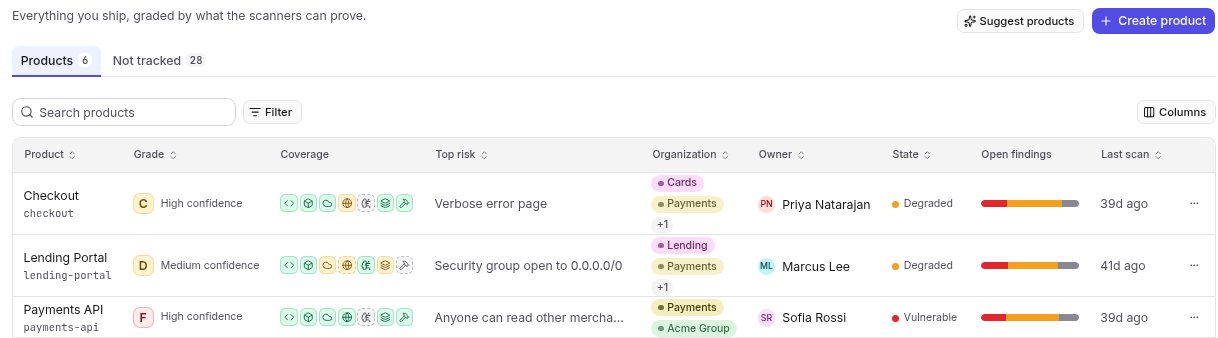
Know where a shared issue lands.
Follow a vulnerable component or shared resource to the products that depend on it, where relationships are established.
- Connected resource relationships
- Products affected by a shared issue
- Responsible owners
Answer reviews with scoped evidence.
Bring inventory, findings, test coverage and remaining gaps into a reviewable product record, with the context needed to understand what it covers.
- Product and assessment scope
- Findings and test evidence
- Dated records and unresolved gaps
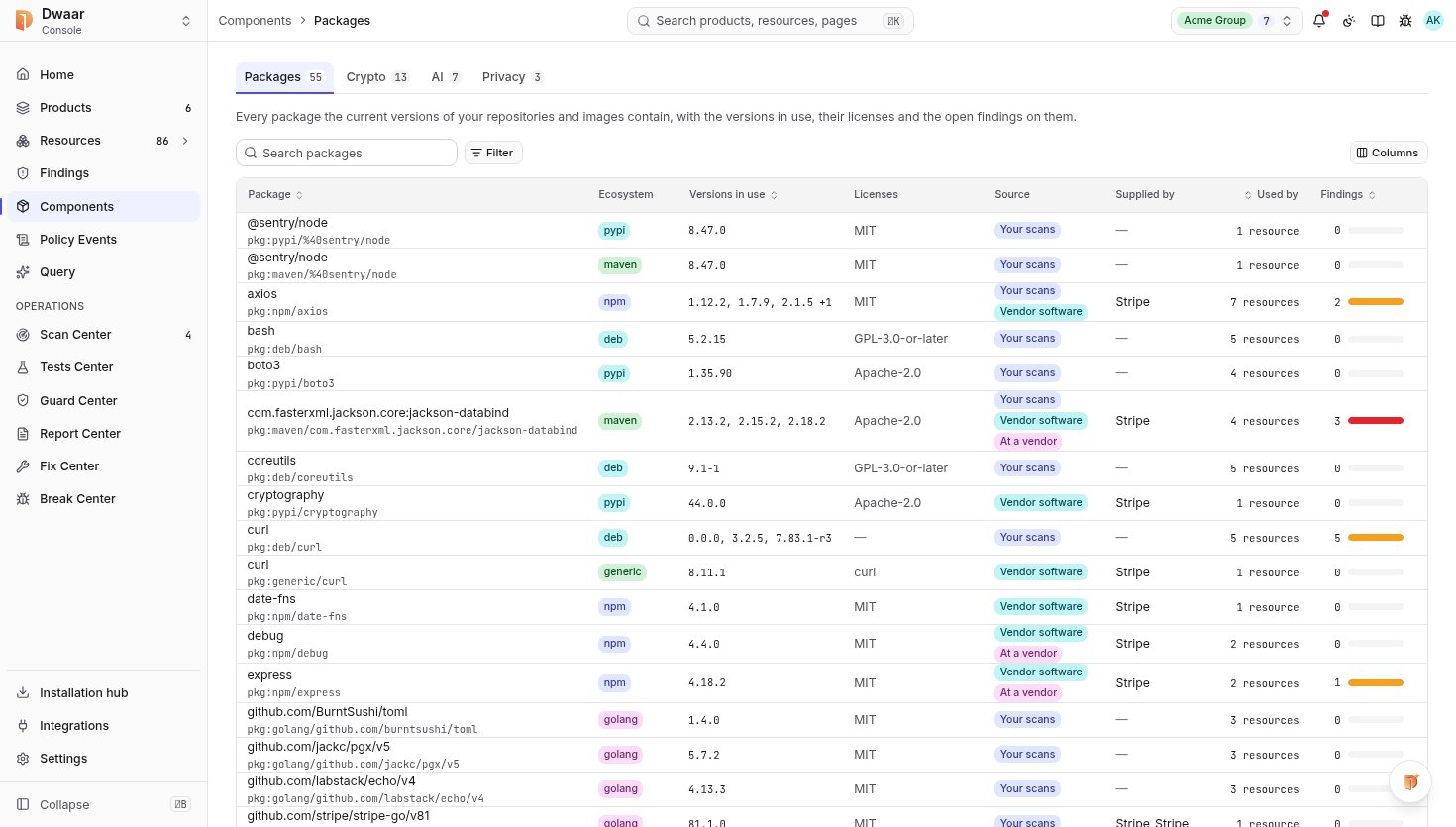
Organise the security work behind readiness.
Connect product inventory, vulnerability handling and security evidence to your preparation effort. Keep technical records and the work still to be done together.
- Product and component records
- Vulnerability-handling evidence
- Open readiness tasks
Dwaar supports technical security and evidence for readiness. The manufacturer determines applicability, completes required reporting and conformity work, and makes the compliance claim.
Understand what an agent can do under attack.
Map tools and permissions, test the agreed workflow, and review attempted actions and results alongside separately identified guardrail coverage.
- Agent and tool context
- Assessment traces and findings
- Supported guardrail evidence
A defined scope. A useful next step.
Start with one product. Connect the context. Give your team a clear next action.