
Product security.
In your operating context.
Start with the products, data and operating pressures your team needs to protect. Connect security work to a clear product view.
Keep security aligned with what your teams ship.
Connect multi-tenant applications, dependencies, cloud services and APIs to product ownership and customer security-review work.
- Tenant and access boundaries
- Reachable dependency risk
- Clear assessment coverage
A shared service supports two SaaS products. A finding on that service needs a responsible owner and a clear view of both products affected.
Understand risk behind financial workflows.
Bring code, infrastructure, API and third-party context together around services that handle financial data and sensitive actions.
- API authorisation
- Cloud permissions and exposure
- Third-party security evidence
An API serves financial account data. Assessment coverage, authorisation findings and the service owner belong in the same product view.
Connect security around sensitive data workflows.
Map the applications, APIs, infrastructure and external services involved in a healthcare product. Keep assessment coverage and review evidence together.
- Data-access paths
- Integration risk
- Reviewable security evidence
A patient-service workflow relies on an API, a cloud workload and an external provider. Their connected context helps the team identify what still needs review.
Follow risk across checkout and connected services.
Understand the resources behind storefront, payment and fulfilment workflows, including the external services they depend on.
- Exposed APIs
- Vulnerable shipped builds
- Vendor dependencies
Checkout depends on a payment integration and a fulfilment service. A product map makes those dependencies and the remaining assessment gaps visible.
Your industry changes the context.
The product stays at the centre.
Connect the resources, understand coverage and put ownership beside the work that needs attention.
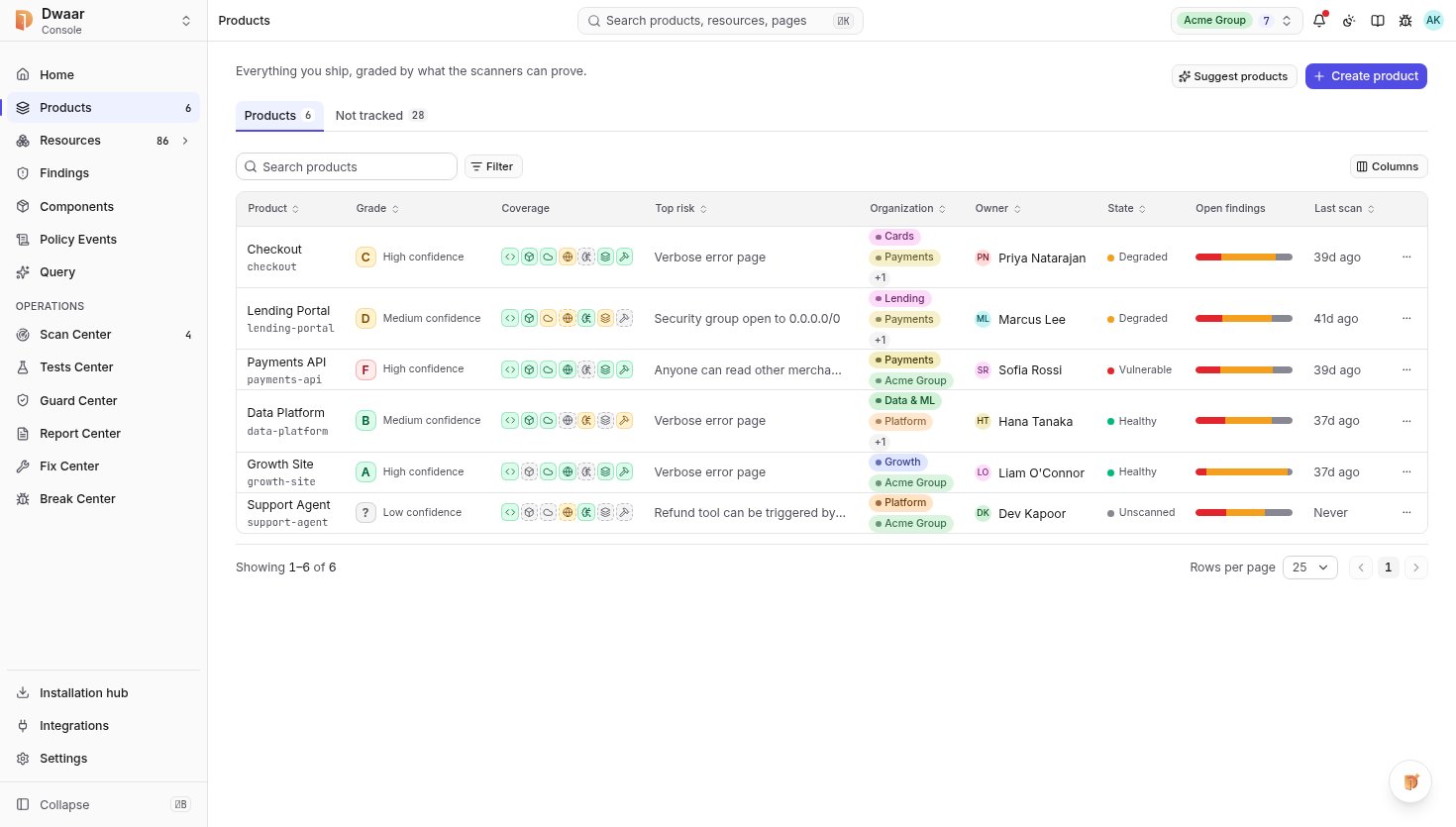
Start with the product you need to secure.
Start with one product. Connect the context. Give your team a clear next action.